
Magic Realm
Legend
“Either Gods, Nature, or One Self are the core of energetic flow.”
Description
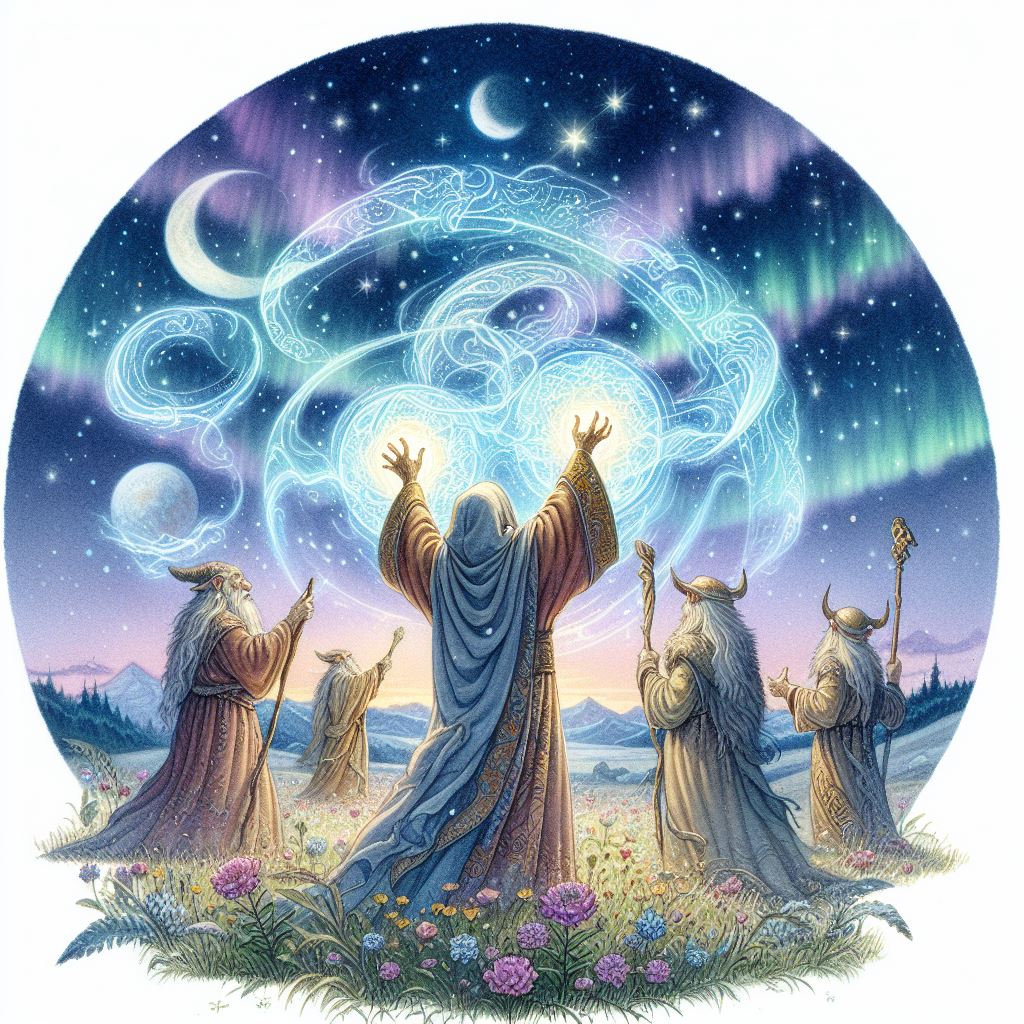
Magic, in all its forms, is the art of shaping reality through forces unseen — a dialogue between the practitioner and the fabric of existence. Whether drawn from gods, nature, thought, or the void, all magic begins with a recognition of something greater than the self: a current that flows beyond mortal reach, yet responds to mortal will. The four realms are not isolated realms but expressions of this shared truth, each offering a different lens through which to engage the same underlying mystery. They are languages spoken by the same voice, each with its own grammar but echoing the same intent.
Across all realms, magic is a negotiation — never truly owned, only borrowed, bargained for, or coaxed into form. The practitioner must cultivate a relationship with their source, whether through devotion, attunement, introspection, or study. This relationship is dynamic and often perilous; magic resists stagnation and punishes arrogance. Yet it also rewards creativity, discipline, and insight, allowing those who understand its rhythms to shape the world in ways that defy natural law. Regardless of realm, the act of casting is a moment of transformation — a brief rewriting of what is into what could be.
Despite their differences, the four realms share a reliance on ritual, focus, and intent. Spells are not simply tools but expressions of the caster’s alignment with their chosen path. Symbols, gestures, words, and mental clarity serve as bridges between the mundane and the magical, anchoring power in form. Whether a channeller’s prayer, an essence-weaver’s dance, a mentalist’s visualisation, or an arcanist’s incantation, the act of casting is always a performance — a moment where belief and technique converge to shape reality. In this, all magic is art as much as it is science.
Ultimately, the realms are bound by a single truth: magic is a mirror. It reflects the caster’s values, fears, desires, and worldview, shaping not only the world around them but also the person they become. The four paths may diverge in practice, but they converge in purpose — to connect, to transform, to reveal. Magic is not merely a tool for power but a means of understanding the self and the cosmos. And in that pursuit, every practitioner, regardless of realm, walks the same road — one paved with wonder, danger, and the promise of something more.
Skjald Valgrif
History
A long time ago, Scholars figured all things adhered to these four realms of Magic.
Skjald Yell'a'Beard
Organisation
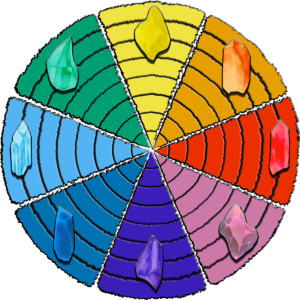
Magic in the known world flows through four primary realms, each shaped by its origin, its method, and its philosophy. Though they often overlap in practice, their foundations remain distinct — like rivers branching from the same source, yet carving different paths through the land. To understand magic is not merely to wield it but to grasp the nature of the realm from which it springs. These realms are not academies or disciplines but fundamental truths — reflections of how power moves through gods, minds, nature, and the void.
Channelling is the realm of divine resonance — the act of becoming a vessel for godly will. Practitioners do not cast spells so much as host them, allowing the essence of deities to flow through their bodies and shape the world. Each god’s power manifests uniquely, and the channeller must align themselves with that divine rhythm or risk being consumed. Channelling is unpredictable, deeply personal, and often transformative, blurring the line between mortal agency and immortal intent. It is a realm of faith, sacrifice, and revelation.
Essence magic draws from the living pulse of the world — the breath of forests, the memory of stone, and the quiet wisdom of rivers. It is not commanded but coaxed through harmony, intuition, and respect. Practitioners attune themselves to natural cycles, borrowing strength from the balance of growth and decay. Essence magic is deeply reciprocal: to take is to owe, and imbalance invites consequence. It is the realm of druids, shamans, and those who walk barefoot across ley lines, listening to the heartbeat beneath their feet.
Mentalism is the realm of the mind — of thought, memory, and ancestral echo. It is internal, introspective, and often perilous, as practitioners must confront their own psyche to shape reality. Mentalists wield illusions, emotional influence, and ancestral knowledge, drawing power from the deep strata of inherited experience. The magic is filtered through belief and identity, making it both versatile and volatile. It is the realm of dreamwalkers, thought-weavers, and those who know that the greatest battleground lies within.
Arcane magic is the oldest and most structured — the manipulation of raw mana, elemental force, and the chaotic lattice of the void. It is learnt through study, refined through logic, and executed with precision. Arcanists do not ask for power; they build it, crafting spells like machines and shaping energy like architects. Though it lacks the elegance of other realms, arcane magic is the foundation upon which all others stand. It is the realm of scholars, spellwrights, and those who see magic as a system to be mastered, not a mystery to be feared.
Skjald El Mary
Special
Magic is balance… keep it so.. or it will enforce… itself upon you.
Skjald Kazumix
Last Updated on 2026-08-24 by IoM-Christian