
Mermerant
Appearance:
Build:
From slim to fat and muscular to stocky.
Height: (cm)
Females: 170-180
Males: 185-195
Weight: (kg)
Females: 55-75
Males: 65-95
Lifespan: (yr)
Females: 95-105
Males: 90-100
Skin:
Pale, pink, beige.
Hair:
Mostly brown tints or black.
Eyes:
Any.
Language:
- REALMISH
- NIMZAXIAN
- WESTRIL
- ILEISH
- OL-DARIN
- HIGH-ARLINIAN
- VULARIAN
- OST-ARLIAN
- THA-ARLIAN
- SOUTH-DARIN
- RIM-DARIN
- EAST-DARIN
- WEST-DARIN
- UPPER-DARIN
- MAARKISH
- FINDONIAN
- EAST-FJELLAS
- WEST-FJELLAS
- EAST-DALISH
- WEST-DALISH
- LOW-NALDAN
- HIGH-NALDAN
- NORTH-UTAR
- SOUTH-UTAR
- NORTH-SKOGISH
- EAST-SKOGISH
- UPPER-SKOGISH
- SOUTH-SKOGISH
- WEST-SKOGISH
- CENTRAL-SKOGISH
CULTURE
Timeline
2 T.A. Mermerant born
Legend
“From several Human tribes, came the Mermerant, to one day dominate our world.”
Description
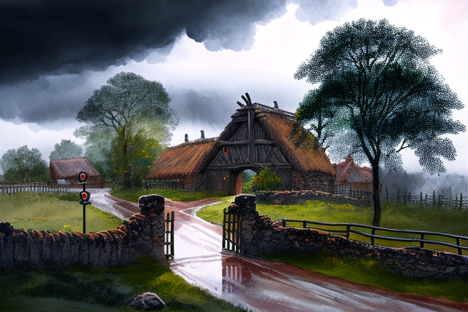
What distinguishes these ‘newfolk’ from other races is the fact that their heritage is rooted in both Indigenous and Wanderers. This blend doesn’t necessarily show in their physical appearance, as they are a mixture of all Human races and could easily go unnoticed. No, it is in their manners that they truly stand out.
As their ancestors mingled—often by noble marriages to strengthen power or through runaways who merely sought to live out their daily love—they became a divided people. Some were indifferent, while the upper class became intensely focused on their self-earned status. Over time, they developed a self-imposed code of honour and protection of the weak, which gave rise to their knightly vows, many of which have been forgotten. One such vow, the ‘Peasant’s Oath,’ was created to instill hope amongst the Mermerant who did not have a noble title.
Every Mermerant noble house traces its roots to old Indigenous chieftains, noble, or royal families, combined with the heroic wanderers of old. They take immense pride in their heritage, possessions, status, and behaviour. For them, family name, personal glory, and power are of paramount importance—but never at the expense of their honour.
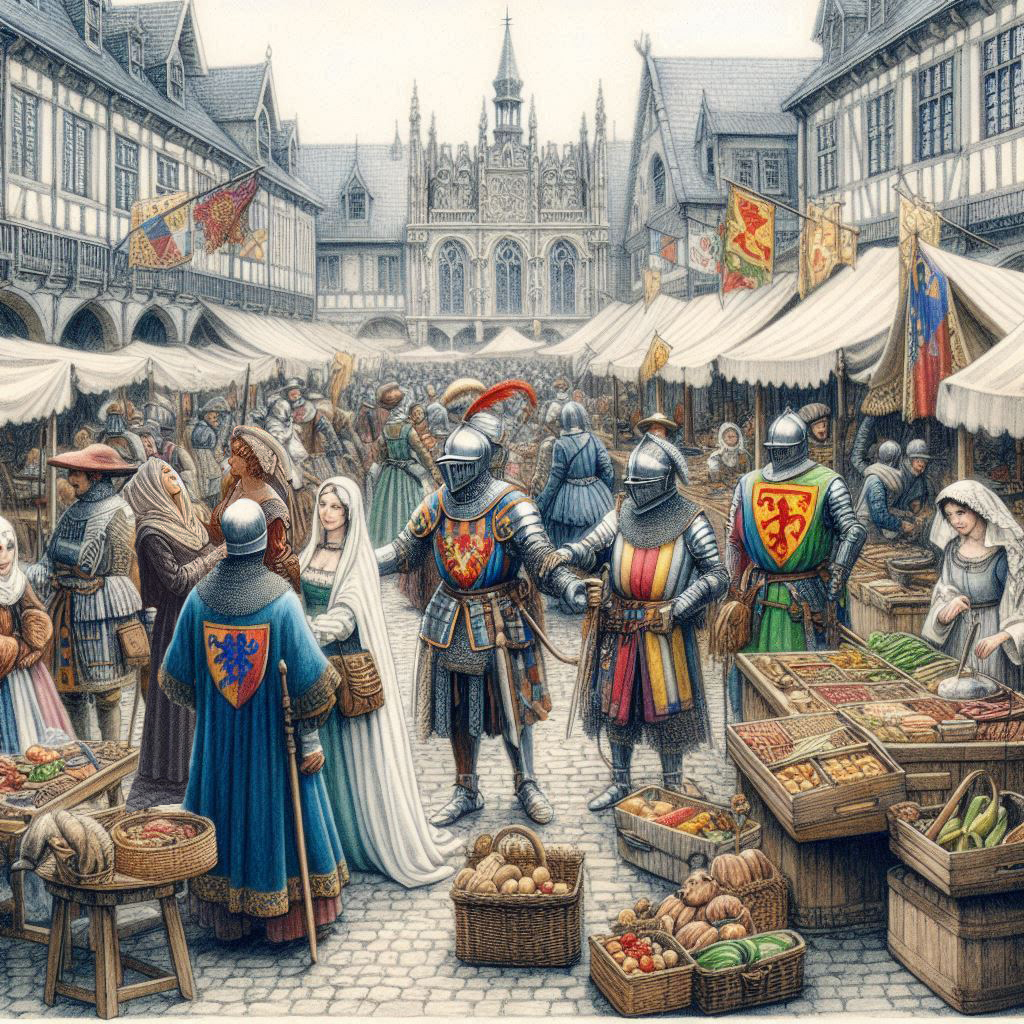
With over five and a half millennia since the first Mermerant were born, more than 100 generations have built great castles, towns, and cities. Roads, bridges, harbours, vast fields of crops or livestock herds, quarries, and mines—all are managed by a myriad of nobles and half-nobles. The workers and less fortunate live in a complex society where opportunities for upward mobility are scarce. Still, a few skilled or brilliant individuals manage to rise through the ranks. Knights protect the levies, and the levies support the knights.
The name ‘Mermerant’ itself is a combination of “merging,” “merits,” and “antiquity,” highlighting both their fusion of peoples and their respect for ancient roots and the potential of the skilled.
Skjald Sejrik
The scattered realms of the Mermerant are remnants of the most widespread and enduring empire in human history. Although some of these realms have since faded into shadows, they defined the borders of almost every current nation.
Mermerant leaders, almost all of whom reside in dominating castles, forts, palaces, or large estates, are responsible not only for governance but also for the study of lore and the training of combat skills. Both nobles and commoners aspire to make something of themselves, particularly as their lifespan is notably shorter compared to many other races—rarely exceeding a century. This brevity of life creates an urgency to achieve, often driving them to act recklessly in the pursuit of grand plans. Such ambition has brought ruin to many, such as Sar Gullerôth Grönspitz, who controlled vast areas of southeastern Markeoy. His insatiable greed ultimately led to the downfall of his family and realm.
Skjald Vinotis
The Mermerant society is divided into four main orders:
- nobility and knights
- Mana manipulators and clergy
- Craftsmen and traders
- Peasantry
Rising from the lower classes grants greater social status, but in reality, craftsmen and traders can earn more than knights. Thus, some choose to remain in their crafts, preferring the relative wealth and autonomy they offer, even if a rise to nobility might be possible. A few even reject knighthood, valuing their craft or the unencumbered wealth that comes with being a high-ranking guild member.
Peasantry generally inhabit rural areas or the outskirts of larger settlements, where their labour is grueling and their workdays long. Fishermen, meanwhile, occupy coastal areas or work from harbours. Hunters live in roughland settlements and are considered on par with other food suppliers.
Settlements such as towns, villages, and cities often house large populations of workers, traders, craftsmen, service workers, scholars, guards, and religious citizens.
Despite being taxed, all of these individuals may be called upon to serve as men-at-arms, ensuring that there is always someone with military training available should a militia need to be assembled.
Skjald Sigurd
From time to time, leaders seek to test their knights and host festivals that allow the lowborn to forget their misery. During these festivals, local and guesting knights compete in tournaments to prove their superiority. The lowborn may join in the festivities and participate in the Melee Mills, though they do not take part in the jousting tournaments. If a lowborn individual wishes to raise their social standing, they must excel on the battlefield or in crusades.
The tournaments span three days:
- First day: A parade and the giving of lady’s favours to the knights, accompanied by the Melee Mills.
- Second day: The jousting tournament, with winners given the opportunity to challenge a knight of colour in ‘The Wheel.’
- Third day: The grand finale, The Wheel.
Though the lowborn are entertained, it comes at their expense. The entire knighthood system is costly, and many peasant uprisings have occurred as a result. These uprisings, however, are quickly suppressed.
Skjald Yell'a'Beard
History
Third AgeThe Mermerant are among the youngest of the races, their origins tracing back to when the Wanderers and the Indigenous peoples met. Their first breath occurred nearly a year after The Crossing, among runaway couples focused on building a life together. Their mixing meant they were busy proving themselves and less preoccupied with the long-standing feuds between Vular and Jomzaar, or between the Wanderers and the Indigenous.
Their dark age
The earliest known Mermerant are believed to have descended from Ogryl and Rimzir lineages in Great-Fjella, and from Jomzaar and Izir unions in Darin. Within a few short years, mixed couples gave rise to Mermerant children across all the isles. While runaway couples often sought refuge inland, those who bonded for power or strategic gain typically settled along the coasts. Naturally, these coastal unions became more visible and inspired others to cross ancestral boundaries as well, causing the coastal Mermerant population to grow more rapidly than their inland kin.
Yet what united them all was the suspicion, jealousy, and hostility they faced from both ancestral sides. In response, the Mermerant began to establish their own network of relations and alliances—drawing on their roots as they ascended the social ladder, they relied on one another in times of need. These early acts of unity formed the roots of what would later become their famous oaths, and sparked their cultural emphasis on honour, legacy, and displays of strength.
By the time the first generation of Mermerant children had matured and begun families of their own, a cultural preference for marrying within their own kind had already taken hold—unless a strong alliance could be made. Some elders warned of the dangers of inbreeding, advising instead to choose stronger partners to ensure healthier offspring and greater protection.
Skjald Vinotis
Tyveshoej, their first realm
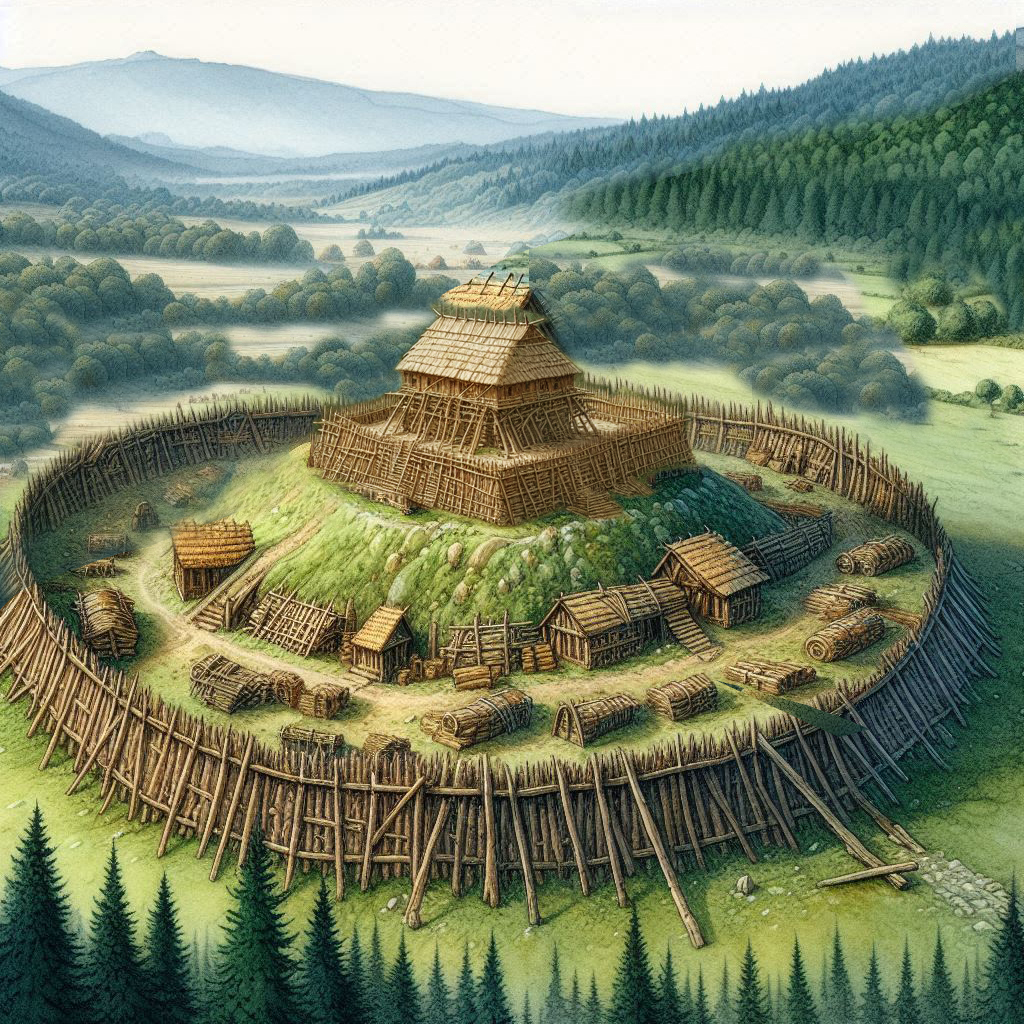
In the year 42, Raulin Ze'Araki-du Pint led a large group, primarily from the two grand Mermerant families merged due his marriage, to settle anew in central Fjella. Eventually they eyed a perfect place, upon arrival the convoy was attacked by a contingent of enigmatic Fautyr, forcing them to hastily organise a defence. Their accompanying mana manipulators played a key role in repelling the initial assault, and news of the siege spread quickly. Other Mermerant soon arrived, either joining the defence or launching attacks against the Fautyr flanks.
Within a week, so many Mermerant had gathered that the Fautyr retreated. Yet the defenders, wary of their attackers’ reputation, remained on high alert. Though they sent no summons, more Mermerant continued to arrive. Soon, hundreds were laying streets, building homes, erecting palisades, digging trenches and laying pit traps. Two weeks later, the Fautyr returned—this time alongside Ljósálfar, a large group of T’aurs, and two Stoicheian.
The 1,834 defenders braced for their final stand. But nothing occurred. The Stoicheian arrived the following morning. Fearing what they would do to them all, a young girl known as Leani Ze'Araki-du Pint decided to confront them. Slipped past the lines and went out to meet them, arms out in defiance.
Overlooking the little, frail person. The Stoicheian read her mind. One of them started handweaving: colours erupted, energy swirled, and a mist deepened, turning the area into a swamp. Leani stood firm, arms spread in defiance. The marsh then liquified, causing her to plummet underwater—and then a Vornir emerged on the water’s edge. As Leanis’s final bubbles breached the surface, it grieved, and it’s tears dropped into the newly formed lake, honouring her bravery. The tears spread and enclosed Leani, keeping her alive although her spirit had departed, just as vampires was born. This surprised the Stoicheians and caused them to halt weaving.
The second Stoicheian then spoke: “We, Old Mistmaker and Red Ground-Burner, were sent to destroy you. But for Leani’s sacrifice, and fate, we will spare you.” Flames burst from its hands, scorching a narrow strip of land into near-glass that stretched as far as the eye could see. “This scar marks where the sacred grounds of the elder races begin.What you have—Tyveshøj, the lake, and Leani—is all yours. But cross it, and we shall return and destroy you.”
With that, they returned to the awaiting n’erectus and all departed.
The Mermerant never crossed Mariki and Wiqual’s Mark. Instead, they built a burial field along the scar, and a chapel at the lakeshore—naming it Lake Leani in honour of her courage and sacrifice. Over the following century, Tyveshøj grew, so fast that none noticed the occasional dissaperence of young girls, into a thriving city, and by its hundredth anniversary it housed 7,500 citizens. Its landsknechts, once a militia raised for protection, became a respected mercenary force.
Skjald Sigurd
Tyveshøj became the de facto capital of Fjella’s Mermerant. Mixed-heritage children from remote settlements were sent there to serve the upper class, become apprentices, or join the mercenary corps. Many soldiers later returned or spread to new regions, weaving a vast network of Mermerant military units across Fjella.
Their everyday challenges were more focused on proving their value by securing or farming the lands, serving others, and supporting their relatives. They expanded in quantity and prominence. Using Tyveshoej as an example, they began establishing new Mermerant settlements around Fjella, occasionally causing conflict with others. When settlers called for aid, they deployed men-at-arms to assist their relatives.
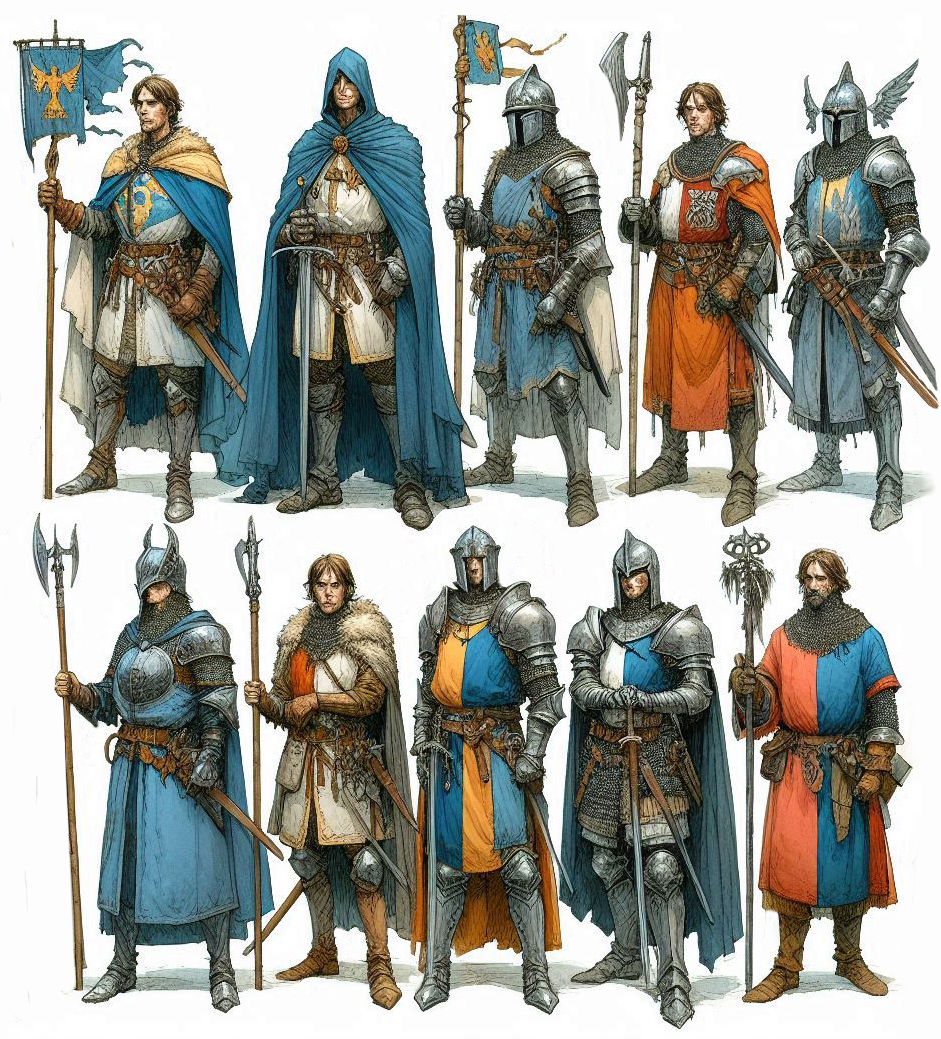
But, as everyone of the selected always walked to Lake Leani and knelt in homage to their lady in the lake, they realised the impact she had on army morale. So, they made Leani Ze’Araki-du Pint a knight, and from then all nobles kneeling there were knighted. Knowing the risk of excluding weapon-skilled lowborns, they devised vows that could be sworn, and if proven worthy, even a lowborn could become a knight. This created the groundwork for their knightly orders, and Liani was the sole female knighted for courage under their first emperor’s reign.
Chivalry and the origins of knighthood
When not aiding their cousins securing footholds, they began increasing the areas they controlled. At times these skirmishes resulted in horrific acts to win, so rules of conduct began to appear. Especially needed as expanders sometimes clashed with their own kin, which reduced the number of nobles. Thus a ruleset for younger sons about becoming a knight (the errantry trials) surfaced.
As they strengthened their grasp on Fjella, the Mermerant spread further afield, often employing uncivil methods. These confrontations, occasionally amongst Mermerant factions themselves, resulted in horrible acts and significant casualties of nobles and knights. To remedy this, a code of conduct arose. Especially crucial were rules guiding younger sons through errantry trials.
Skjald Ulrich
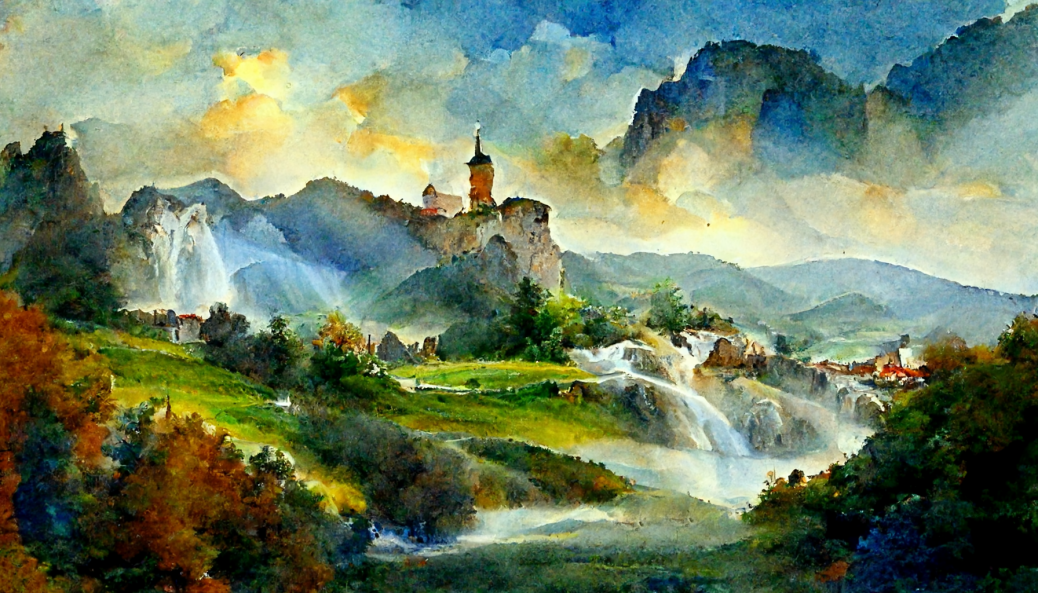
The Mermerant didn’t confine themselves to Fjella. They established footholds on Dalip (58), Midgard (59), Ljostari (60), Darin (62), Markeøy (67), Naldar (70), Utari (73), Mealis (75), and Findon (77). Carefully avoiding sacred lands of both Indigenous peoples and the N’erectus, they flourished and replicated the kinship networks pioneered on Fjella.
Each their own Royal House, growing powerful, building castles, towns, and cities with great courts, layered bureaucracy, and swelling nobility. Their proud lineages bore distinct coats of arms, and when they marched to war or crusade, they cut a dazzling figure—unified only in ambition and the pursuit of power.
Their Third Age conflicts are too numerous to list, but their influence grew so vast they reshaped nearly every known kingdom. It is said that the Vular’s obsessive hunt for relics and lost lore was a direct attempt to counter the Mermerant’s growing dominance—and the very reason the Vular were deceived into waging the greatest war ever known.
Skjald Sejrik
Many Mermerant contingents had joined the forces of the Ljóstálfar and were present on Ljostari when events spiralled out of control. Some argue that it was their direct involvement which drew the catastrophe so heavily upon them. As their most skilled knights and wisest mana manipulators began to see how the situation was unravelling, a few dared to astravel away—though only a handful survived, as most were either dissolved in transit or transformed into hideous aberrations.
Yet, just prior to the eruption of Mount Ljostari, some reappeared in their home halls and courts—some to be struck down as corrupted wretches, others to deliver dire warnings. And then it happened: Ljostari crumbled and sank.
The shock rippled across the world. Earthquakes thundered through the land, rending ancient Void Garden seals and unleashing raw, unbound energies. The lands surrounding Tyveshøj tilted, cracked, and crumbled. Some parts sank. Then came the Deep Blue Tsunami, its tainted waters crashing ashore, seething with strange energies that stirred the long-dead. Thus, the Arisen began to roam.
Though accustomed to hardship, conflict, and war, the Mermerant suffered greatly. Yet their greatest strength proved to be their far-flung presence across the world. Those who had escaped devastation or remained untouched by the Arisen incursions swiftly sent aid. Thus, by the time the first Liches appeared, the Mermerant had salvaged what could be saved. They mourned in quiet dignity—especially for the loss of Lake Leani, their capital Tyveshøj, and its three thousand years of lore.
In the year 66, they elected a new emperor from among their remaining kings. But the world had changed. The Arisen had emerged. The growing might of the Liches. And the surging Hordes, things never truly returned to what they were. Where once they had held sway over nearly every kingdom, the Mermerant’s realms began to diminish and fragment. Still, they remained an important power among the Mannish peoples.
Skjald El Mary
At first, they refused to support the 1st Alliance, viewing it as a greater threat to their crumbling empire than Arisen, Liches, and hordes. But as the campaign gained traction, they eyed an opportunity; by joining, they might one day place a Mermerant upon the High King’s throne, and thus renew their dominance. So, one of their ladies, seemingly of ancient bloodline, and a master of both strategy and fencing, championed their support. Their participation proved decisive against the Torch and shifted the tide of the 1st Alliance conflict.
As the High King was crowned, many Mermerants were stunned to see their monarch hand his crown to the Black Oak, effectively making them all his subjects. Unable to percieve the strategy, many became furious over their emperor’s betrayal, fights approaching civil war sprang out between Mermerant loyalists and independenters.
So as the Realm as such evolved in peace, Mermerant soil was burning under the surface. These internal skirmishes, which further fragmented their power and prestige, persisted right up until the Great Invasion. But, when it erupted, all Mermerant forces rallied as one. United in fury, they threw themselves against the invaders—especially the Pigryns, who learned the hard way what Mermerant lance formations could do.
Yell'a'Beard
Cartography
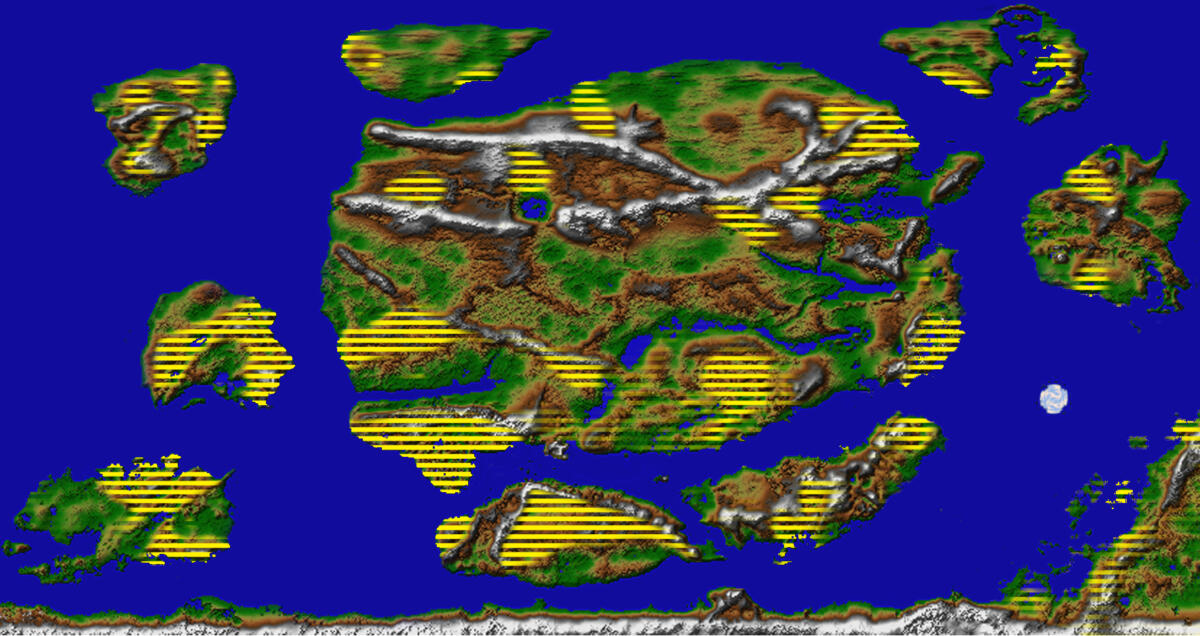
As such they are spread throughout all the realms Isles, and countries. With enclaves and realms of various size and power, but the marked areas are where they eiter have an upper hand in leadership, or outright rule the lands.
Their castles, walled towns, and the ports are generally at the coasts or riverbanks, valleys, plains, and mountain foothils, as they avoid the deep forests or wilderness. Their dukedoms (location, people, and capitals):
Midgard: Bebram, Etain, Falbur, Fridor, Fril, Gaslug, Keshon, Kustu, Ladris, Scia, Shoak, Spiy, Thayri, Trov, Udring, Zilbur
Naldar: As some wanderers managed to gain foothold on the otherwise hostile N'Aldaan and slowly found spouses or ran off to other clan areas, they spread across Jabos, Karoly, Lioni, and Seviels.
Naldar was a hard place to gain property and positions, but their success quickly brought more wanderes in and the sites with accepted wanderers saw a rapidly growing Mermerant population.
Most likely all would had been killed by local lords if not the wanderers and Mermerant luck lay in the n’aldaan hieracy. None dared attack in case these strangers had a higher blessing. Time has not cooled feelings about those N’aldaan running off and gossip still runs strong about those participating in bond making. But in time the Mermerant grew so strong that very few N’aldaan clan lords found it wise to purge them.
As good as all Mermerant settlements on Naldar are walled in some way, and most are fortified and has contingents of mercenaries or knights errants. These are often quite skilled as they sell their services to N’Aldaan and we all know that loosing side participants seldom survive. These are in fact also what cleansed the Naldar Mermerant sites from most Arisen when they were born.
Skjald El Mary
Dalip: Aigon, Amrad, Bowei, Golny
West Fjella: Apal, Claun, Oglan
East Fjella: Grebi, Tornix, Usai
Findon: Andalus, Skelop, Ugren
Mealis: Burfal, Osmes, Pearlin
Skjald Ulrich
Organisation
From a scattering of refugees and a few well-married families, the Mermerant have, over the course of five millennia, shaped themselves into one of the most refined and complex societies of the Mannish races. What began as mere survival gradually developed into a vast, stratified structure—woven together through fealty, courtly intrigue, and ancestral bonds.
At its core, the Mermerant hierarchy is built upon layered councils. Settlement leaders—nobles of varying stature—form local courts alongside neighbouring rulers. These courts then elect representatives or subtly manoeuvre their own candidates into regional councils, each of which governs a greater isle. These island councils hold considerable influence and status, and it is rare for a lesser noble to rise to such ranks—though when they do, they are often individuals of exceptional brilliance.
Skjald Valgrif
Society

Their noble structure is as follows:
- Emperor / Empress — Sovereign of all Mermerant.
- Great King / Great Queen — Ruler of a greater isle, holding ultimate power over their population.
- King / Queen — Ruler of a Kingdom, holding power over their realm.
- Duke / Duchess — Ruler of a region: Highest rank of nobility below the royal family, historically, they often ruled large territories or provinces.
- Marquess / Marchioness: Ruler of a border region.
- Count / Countess — Administrating a specific region.
- Viscount / Viscountess: Administrating a regional county.
- Baron / Baroness — Governing a manor or settlement of their king/queen, they are the lowest rank of the peerage.
- Baronet/Baronetess: A hereditary title with ties directly to the Great Kings or Emperors.
- Knight / Dame — The lowest group of the noble class, often focusing on military service to a lord rather than acting as regional rulers.
Each noble level has its own courts, and anybody may appeal to a higher court—if they can afford the expense and muster the effort.
Beneath the nobility stand:
- Manipulators — mana manipulators, and religious figures
- Worker class — Peasants, fishers, and hunters
- Service Class — Traders, craftsmen, and scholars
Each greater isle elects a single Liaison, who takes a seat among The Nine—a prestigious council that elects one of their own to become The Mermerant, the political and symbolic head of all Mermerant. Once their social and political systems were firmly established—whether living in great castles, rural villages, isolated manors, or scholarly retreats—all Mermerant pledged fealty upwards, ultimately to the local King or Queen of their isle. However, they did not swear oaths to the Mermerant office itself.
Only once in their history, in 1250 FA, did their Kings and Queens legally extend their vows outside their isles. When Jörgûl Neõptûr, the former Mermerant, dedicated their people to the Realm, they were effectively obligated to the High King.
Many opposing voices, who saw such fealty as submission to an external power, began planning Jörgûl’s end. Despite their official commitment, the Mermerant maintained considerable independence, regularly disobeying the increasingly irritating “Law of the Realm.”
That oath, hard-won and fiercely debated, was nonetheless honoured loyally during the Great Invasion—even after the death of the Third High King. When the Cleansing Crusade ended, and the High King released them at the Grimsborg Memorials Revealing, the Mermerant laid down their foreign oath with quiet relief.
Skjald Vinotis
Armies
Their armies are composed primarily of elite knights and trained levies.
- Men-at-arms — Professional soldiers sworn to lords
- Militia — Levied commoners serving in times of war
The most famous among them is Den Godan, whose family famously chose the path of the Hordes, believing it better aligned with their nature.
Skjald Yell'a'Beard
Religious
To this day, Mermerant knights undertake pilgrimages to the ancient chapels that still shelter untainted waters from Lake Leani. In solemn rites, they wet their lips upon dampened grails, honouring the lost capital of Tyveshøj. Their most sacred pilgrimage is the journey to Kistal, deep within Lake Mirror, where Hecl Zalenwa, great-grandson of Raulin Ze’Araki-du Pint still live.
Skjald Vinotis
Special
Some had their suspisions, but during The Great Invasion it became obvious, that Leani Ze’Araki-du Pint still walked amongst us.
Skjald Valgrif
Last Updated on 2026-08-27 by IoM-Christian